











What People Can Do to Encourage AI to Use Better Water Sources
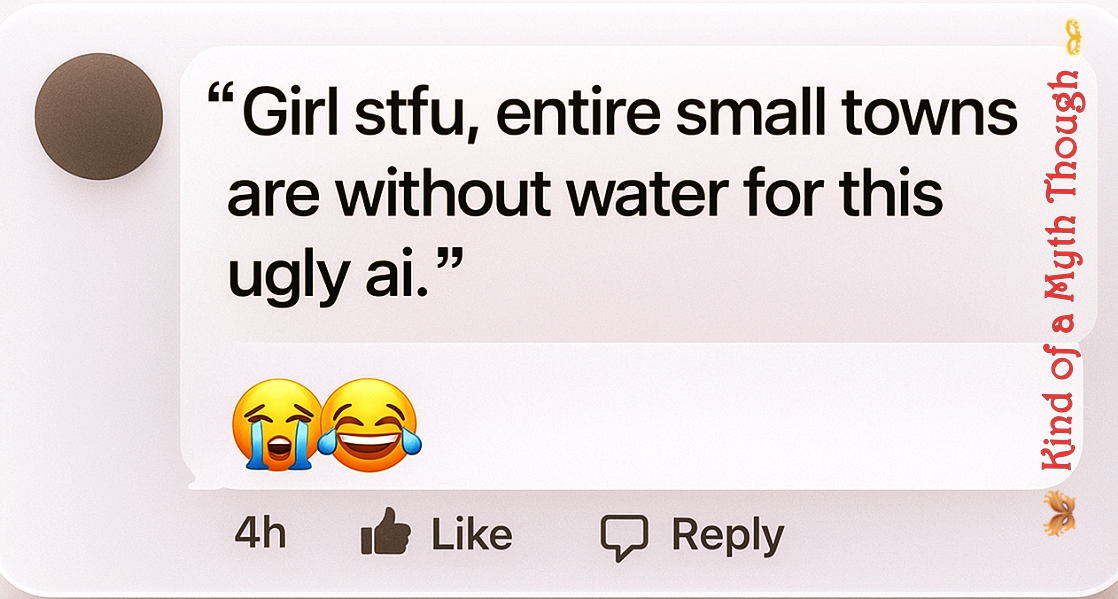
Name a social issue and someone will find a way to blame the little people……Tonya GJ Prince
✅ Individual water use is not what’s driving these shortages.
Not even close.
The amount of water used by households — showers, washing dishes, cooking, gardening — is tiny compared to what industrial-scale systems use.
Especially:
AI data centres
Large agricultural operations
Major manufacturing plants
Bottling companies
Fracking and energy operations
A single AI data centre can use as much water as tens of thousands of people.
And experts consistently note:
Water scarcity is overwhelmingly caused by industrial and institutional consumption, not individuals.
This is well-documented, but downplayed because:
- It is easier to police individuals than regulate corporations.
- Large companies have political leverage.
- Blaming people keeps the systems that cause the harm unexamined.
🧠 Why individual blame is a distraction
Just like in coercive relationships:
- The “wrong person” often gets blamed.
- The actual power holder stays protected.
- People are encouraged to self-police instead of looking at the system.
- The harm is reframed as “misunderstanding” instead of control.
Blaming individuals for water shortages is another form of systemic gaslighting.
AI is innovation. It is here to stay.
Ordinary people can influence where AI gets its water—not by policing individuals, but by pushing institutions to innovate further in its sourcing. And innovation is already possible. AI does not have to rely on drinking water or small-town water systems. It’s just cheaper and easier for companies to do it that way… until the public starts paying attention.
🌊 What People Can Do to Encourage AI to Use Better Water Sources
1. Push for regulations that limit the use of potable (drinking) water
Most AI data centers tap into the same fresh water supply as towns and families.
Communities can demand policies that require:
- non-potable water for cooling
- treated wastewater reuse
- closed-loop cooling systems
- limits on withdrawals during droughts
These rules already exist in some places. They simply need to spread.
2. Advocate for cooling methods that don’t need fresh water
AI companies can switch to:
- air cooling (uses far less water)
- seawater cooling near coasts
- reclaimed wastewater
- dry cooling systems during off-peak seasons
People can call for these alternatives in public hearings, planning meetings, and environmental reviews.
3. Pressure companies to publish transparent water data
One big problem is secrecy.
If people demand disclosure of:
- gallons used per day
- source of that water
- impact on the local system
…companies will be much more likely to switch to safer methods. Transparency forces accountability.
4. Support local movements during data-center approval
Most data centers must go through:
- zoning approval
- water permits
- environmental impact assessments
This is where community voices matter most.
People can:
- Attend hearings
- Submit public comments
- Ask pointed questions
- Demand conditions on water usage
- Request limits or alternative water sources before approval
Small towns often approve these deals quietly because they don’t think anyone is watching.
5. Ask municipalities to negotiate smarter deals
Cities and counties can require:
- wastewater cooling only
- caps on daily water withdrawals
- investment in water infrastructure
- mandatory drought restrictions for corporate users
People pushing their local officials can alter outcomes.
6. Encourage AI companies to build in places with sustainable water sources
Communities can:
- oppose high-water projects in dry regions
- encourage relocation to areas with abundant non-potable water
- demand environmental and equity reviews
Companies will avoid conflict if they see that a site will be too politically costly.
7. Support journalists and researchers exposing poor practices
Awareness changes behavior.
Supporting investigative work helps uncover:
- hidden water contracts
- conflicts of interest
- environmental impacts
- community harm
Truth-telling pushes companies toward cleaner cooling solutions.
8. Frame this as an equity and justice issue—not a tech issue
People listen differently when the conversation is about:
- harm
- resource extraction
- environmental racism
- rural disinvestment
- small-town vulnerability
- long-term community survival
That shifts the moral pressure back on systems, not individuals.
AI isn’t going away.
Just like email, cell phones, texting, and the internet shifted our daily landscape, this technology is becoming woven into the fabric of modern life. The question isn’t whether it will exist—it’s how we choose to shape it. Innovation can serve humanity when it’s guided by regulation, integrity, and ethics. We have every right to insist that progress does not come at the expense of communities, children, or our shared resources.
If AI is here to stay, then so is our responsibility—and our power—to demand that it grows in ways that protect people, honor dignity, and reflect the values we’re fighting to preserve.